
 Cart : 0
 Account
The Lai lab at UNC Chapel Hill published an article in Molecular Pharmaceiuticals - Evading…

From Coil to Brush Conformation: Brush PEG Helps You Win Stealth, Circulation, and Immunity for Your Next-Generation Protein Therapeutics.
Abstract
Poly(ethylene glycol) (PEG) remains the most widely used polymer for imparting stealth, antifouling, and lubrication properties to surfaces, nanoparticles, and biologic drugs. When PEG chains are densely grafted—either to a surface or as side chains along a polymer backbone—they adopt an extended “brush” conformation that differs fundamentally from the collapsed “mushroom” regime of sparsely grafted chains. This conformational transition dramatically improves protein resistance, reduces nonspecific cellular uptake, and can mitigate recognition by anti-PEG antibodies. This review comprehensively examines the physics of the mushroom-to-brush transition, synthetic strategies for preparing surface-grafted and molecular (bottlebrush) PEG systems, structure–property relationships, and biomedical applications ranging from long-circulating nanocarriers and protein conjugates to diagnostic surfaces and injectable depots. Particular attention is given to poly(oligo(ethylene glycol) methacrylate) (POEGMA) bottlebrush polymers as next-generation alternatives that retain PEG-like hydration while substantially reducing immunogenicity. Challenges in achieving high grafting density at scale, long-term stability, and clinical translation are discussed, along with emerging design principles.
1. Introduction
PEG has been the gold-standard “stealth” polymer in nanomedicine and biomaterials for more than four decades. Its high hydration, low toxicity, and ability to reduce protein adsorption and opsonization have enabled numerous clinical products, including PEGylated proteins, liposomes, and lipid nanoparticles used in mRNA vaccines. However, the increasing prevalence of anti-PEG antibodies in the general population—arising from both PEGylated therapeutics and everyday exposure to PEG-containing consumer products—has created clinical challenges: accelerated blood clearance (ABC), reduced efficacy upon repeated dosing, and occasional hypersensitivity reactions.
One of the most effective strategies to address these limitations is to control PEG architecture and conformation. When PEG chains are end-grafted at sufficiently high density, steric repulsion forces them into an extended brush conformation rather than independent coils (mushroom regime). The same principle applied to molecular design yields bottlebrush polymers in which short oligo(ethylene glycol) side chains radiate from a backbone. Both surface PEG brushes and molecular bottlebrush PEGs (most notably POEGMA) exhibit superior antifouling performance and, in the case of short-side-chain architectures, markedly reduced recognition by anti-PEG antibodies.
This review synthesizes the theoretical foundation, synthetic methodologies, characterization approaches, and biomedical applications of PEG brushes, highlighting how conformational control and architectural engineering expand the utility of PEG while mitigating its immunogenicity liabilities.
2. Theoretical Background: Mushroom versus Brush Conformation
The conformational behavior of surface-grafted polymers is described by the Alexander–de Gennes scaling theory. Two characteristic length scales govern the regime:
- Flory radius RF of a free chain in good solvent.
- Average distance D between grafting points (D=σ−1/2, where σ is the grafting density in chains per unit area).
When D>2RF (or more strictly RF/D≤1), chains remain largely unperturbed and adopt a mushroom conformation. As grafting density increases and RF/D>1, neighboring chains overlap and stretch away from the surface to maximize conformational entropy, entering the brush regime. In the dense-brush limit, the brush height L scales linearly with the degree of polymerization N (L∝N), rather than the weaker dependence characteristic of mushrooms.
For PEG, the transition is particularly consequential because the brush state creates a thicker, more uniformly hydrated layer that presents a higher steric and osmotic barrier to protein adsorption. Experimental studies on ovalbumin nanocarriers, gold surfaces, and lipid nanoparticles consistently show that brush-regime PEGylation (achieved either by higher density or longer chains) more effectively suppresses phagocytic uptake than mushroom-regime coatings of comparable total PEG mass. Clusterin enrichment in the residual protein corona of dense brushes further contributes to stealth behavior.
3. Classes of PEG Brushes
Surface-grafted (2D) PEG brushes. Linear or multi-arm PEG chains are end-tethered to planar substrates, nanoparticles, or device surfaces. Density is typically expressed in chains/nm²; values ≥0.2–0.5 chains/nm² for PEG 2–5 kDa usually place the system in the brush or dense-brush regime.
Molecular (bottlebrush) PEG polymers. A linear backbone is densely functionalized with PEG or oligo(ethylene glycol) side chains. The most prominent example is POEGMA, prepared by controlled radical polymerization of oligo(ethylene glycol) methyl ether methacrylate (OEGMA) macromonomers. Side-chain length (number of EG repeats) is a critical design variable: EG2–EG3 side chains minimize anti-PEG antibody binding while retaining excellent protein resistance; longer side chains (EG9) improve hydration but increase residual antigenicity.
Comb polymers (lower grafting density along the backbone) are intermediate architectures; true bottlebrushes require high side-chain density that forces backbone extension.
4. Synthesis Strategies
Three principal approaches are used.
Grafting-to. Preformed end-functional PEG is reacted with complementary surface groups. Advantages include precise characterization of the polymer before attachment and commercial availability of activated PEGs. Disadvantages are steric limitations that often restrict achievable density. Creative solutions include high-salt conditions (e.g., 0.9 M Na₂SO₄) that promote denser grafting by reducing chain repulsion during attachment, and the use of highly reactive anchors such as o-phthalaldehyde for amine surfaces.
Grafting-from. Initiators are immobilized on the surface, followed by surface-initiated controlled radical polymerization (SI-ATRP, SI-RAFT, photo-ATRP, etc.). This method routinely achieves the highest densities and thickest brushes. Challenges include initiator immobilization efficiency and potential copper contamination (for ATRP), although modern photo- and electrochemically mediated variants mitigate these issues.
Grafting-through. Macromonomers (PEG or OEGMA with polymerizable end groups) are polymerized. Ring-opening metathesis polymerization (ROMP) of norbornene-functionalized PEG macromonomers is especially powerful for well-defined bottlebrush polymers and networks. Free-radical or controlled polymerization of OEGMA yields POEGMA with tunable side-chain length and backbone degree of polymerization.
For molecular conjugates, “grafting-from” the biologic itself (growing POEGMA from an initiator attached to a protein or peptide) offers stoichiometric control and high yields compared with traditional conjugation of preformed linear PEG.
5. Characterization
Surface brushes are characterized by a combination of:
- Ellipsometry or quartz-crystal microbalance with dissipation (QCM-D) for dry and hydrated thickness.
- Atomic force microscopy (AFM) for topography and force spectroscopy.
- X-ray photoelectron spectroscopy (XPS) and surface plasmon resonance (SPR) for chemical composition and protein adsorption kinetics.
- Neutron reflectivity for detailed segment density profiles.
Molecular brushes are analyzed by GPC (absolute molecular weight via multi-angle light scattering), ¹H NMR (side-chain incorporation and end-group fidelity), dynamic light scattering (hydrodynamic size), and, increasingly, cryo-electron microscopy for visualization of the extended architecture.
6. Key Properties
Antifouling and stealth. Dense PEG brushes reduce protein adsorption from serum to a few ng/cm² and strongly suppress macrophage and dendritic-cell uptake. The brush conformation itself, independent of total PEG mass, is a dominant factor in the low-adsorption regime.
Aqueous lubrication. PEG brushes generate extremely low friction coefficients under aqueous conditions by a combination of hydration lubrication and steric repulsion, serving as a model system for biolubrication and inspiring more robust polymer-brush lubricants.
Hydration and osmotic pressure. The high local concentration of EG units creates a strongly hydrated, soft interface that resists compression and interpenetration.
7. Biomedical Applications
- Long-circulating nanocarriers. Brush-regime PEGylation of liposomes, polymeric nanoparticles, and inorganic cores extends blood half-life and alters protein corona composition (favoring dysopsonins such as clusterin).
- Protein and peptide conjugates. POEGMA conjugates of uricase, exendin-4, and RNA aptamers demonstrate superior pharmacokinetics relative to linear PEG analogues, do not induce anti-POEGMA antibodies, and show minimal cross-reactivity with patient anti-PEG antibodies.
- Lipid nanoparticles and mRNA delivery. High-density brush-shaped polymer lipids reduce anti-PEG antibody binding and improve consistency of protein expression upon repeated dosing.
- Diagnostic and sensing surfaces. Conformal POEGMA or PEG brushes on immunoassay platforms minimize background while preserving analyte accessibility; short-side-chain variants further reduce interference from anti-PEG antibodies present in clinical samples.
- Injectable depots and hydrogels. Thermoresponsive POEGMA conjugates can form subcutaneous depots that provide sustained peptide release without eliciting polymer-specific immunity.
- Mucus penetration. Bottlebrush PEG architectures mimic mucin structure and can more efficiently traverse airway mucus barriers than linear PEG carriers.
8. Immunogenicity Mitigation via Brush Architecture
Linear PEG presents long, repetitive EG sequences that can be recognized by both backbone- and end-group-specific anti-PEG antibodies. Breaking these sequences into short side chains (especially EG2–EG3) in a bottlebrush architecture sterically hinders antibody binding while preserving the high local density of EG units needed for hydration and protein resistance. Clinical plasma studies and animal models confirm that optimized POEGMA conjugates evade recognition by pre-existing anti-PEG antibodies and do not themselves induce a strong antipolymer response—advantages not shared by conventional PEGylation.
9. Representative Examples of Bottlebrush PEG Systems
Bottlebrush PEG architectures have moved beyond conceptual demonstrations into well-characterized systems with clear pharmacological advantages. The following examples illustrate the range of performance gains achievable through precise control of backbone length, side-chain length/density, and degradability.
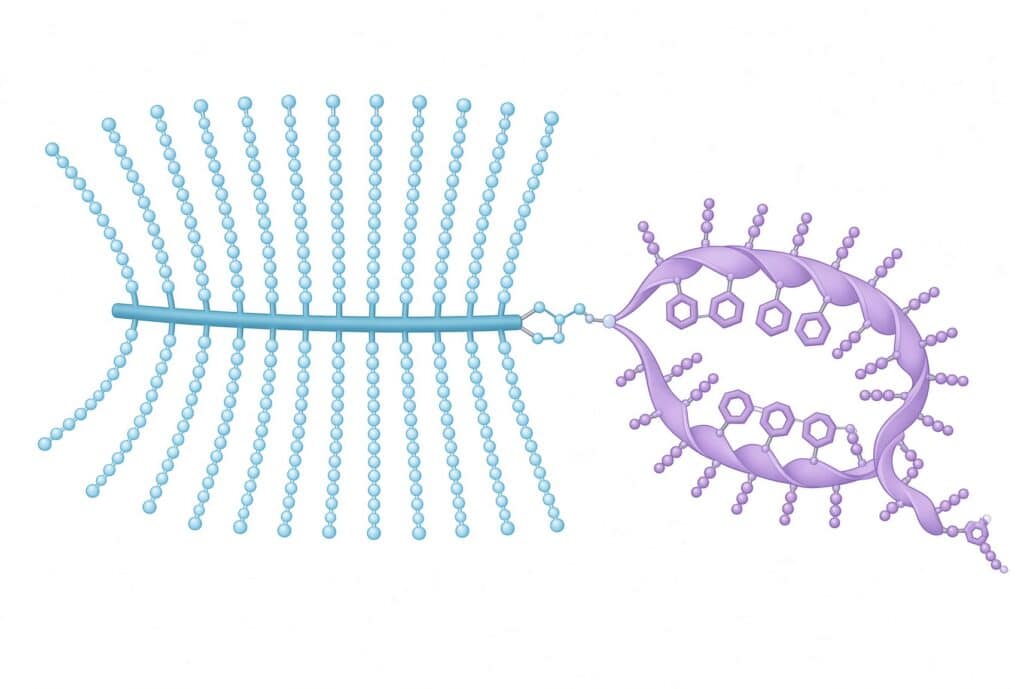
Site-specific POEGMA conjugates of therapeutic peptides (exendin-4). Qi et al. demonstrated that C-terminal, stoichiometrically controlled conjugates of the GLP-1 receptor agonist exendin-4 with poly[oligo(ethylene glycol) methyl ether methacrylate] (POEGMA) produce prolonged glycemic control. A single subcutaneous injection lowered blood glucose for up to 120 h in fed mice—approximately 20-fold longer than the unmodified peptide. Critically, conjugates bearing an average of nine ethylene glycol (EG) repeats per side chain showed markedly lower reactivity toward patient-derived anti-PEG antibodies than two FDA-approved PEGylated drugs. Reducing the side-chain length to three EG repeats completely eliminated detectable PEG antigenicity while preserving in vivo efficacy. This work established POEGMA as a next-generation PEGylation platform capable of decoupling long circulation from immunogenicity [1].
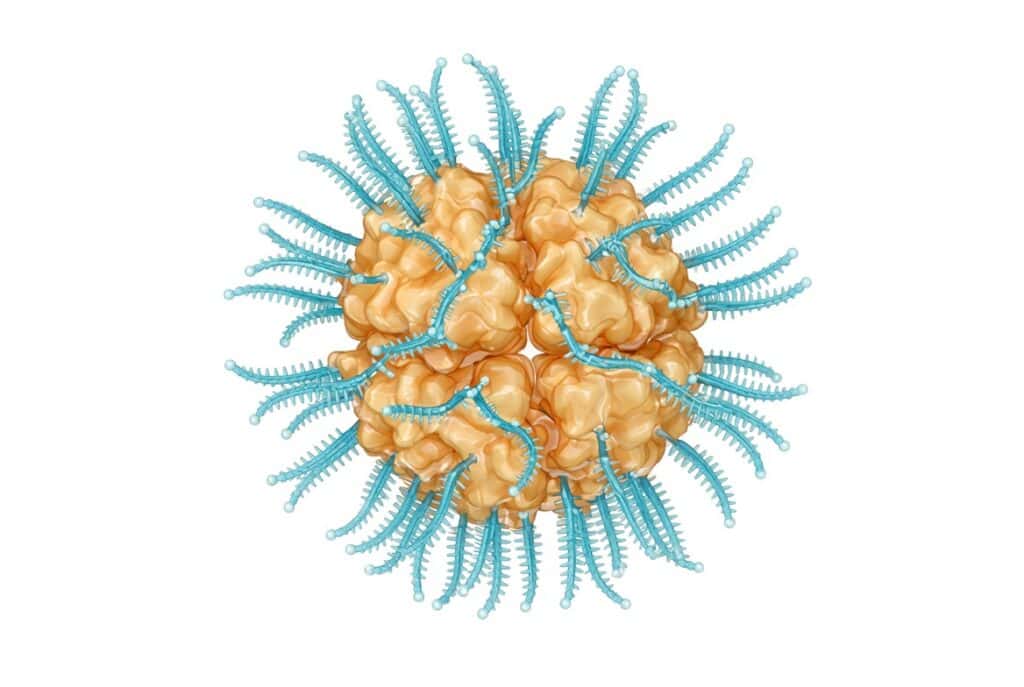
Multi-site POEGMA conjugation of highly immunogenic proteins (uricase). Ozer et al. extended the approach to uricase, an enzyme used for refractory gout whose clinical utility is severely limited by anti-PEG antibodies (both pre-existing and induced). A high-density uricase–POEGMA conjugate (approximately 27 polymer chains per tetramer) retained enzymatic activity, exhibited superior pharmacokinetics relative to molecular-weight- and hydrodynamic-radius-matched linear PEG conjugates, did not bind anti-PEG antibodies, and failed to induce anti-POEGMA antibodies even after repeated administration. The brush architecture therefore simultaneously solved the dual problems of antigenicity and immunogenicity that have constrained conventional PEGylated uricase (pegloticase) [2].
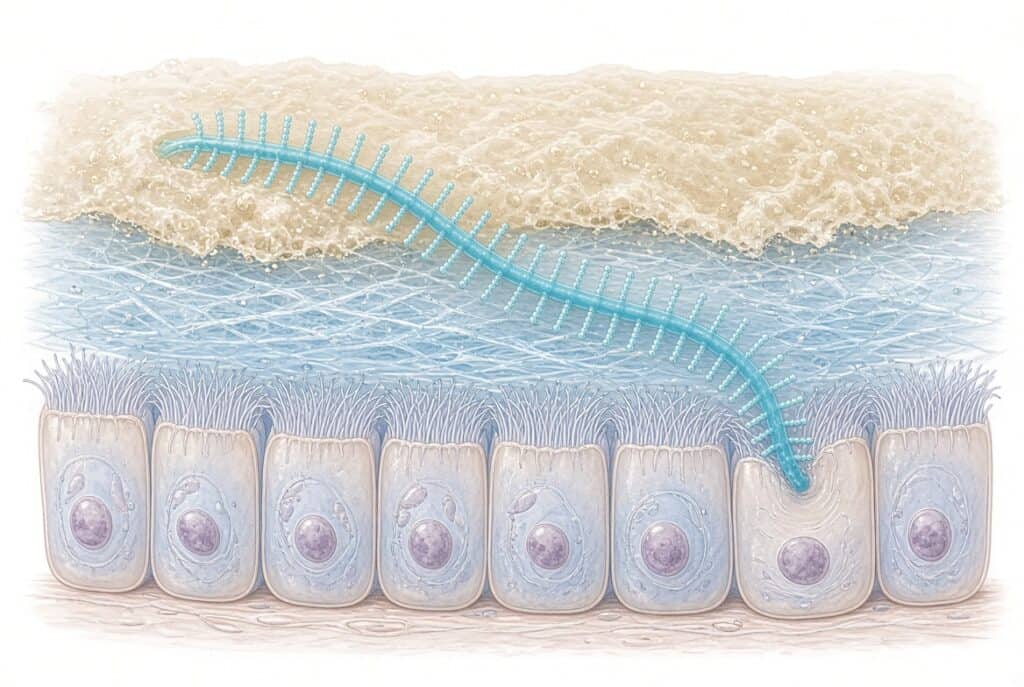
Worm-like bottlebrush PEG nanocarriers for mucosal and pulmonary delivery. He, Huang, and Cai designed a high-aspect-ratio bottlebrush PEG (PEG-BB) consisting of a linear backbone densely grafted with ~1000 short (~1 kDa) PEG side chains. The resulting anisotropic, worm-like nanocarrier (contour length ~250 nm, cross-section ~20 nm, hydrodynamic diameter ~40 nm) rapidly penetrates endogenous human airway mucus and the periciliary brush layer and is internalized across the entire epithelium. Comparative studies with loosely grafted analogues demonstrated that the dense bottlebrush architecture itself enhances endocytic uptake. This system offers a promising platform for overcoming the multiscale barriers that limit pulmonary drug delivery [3].
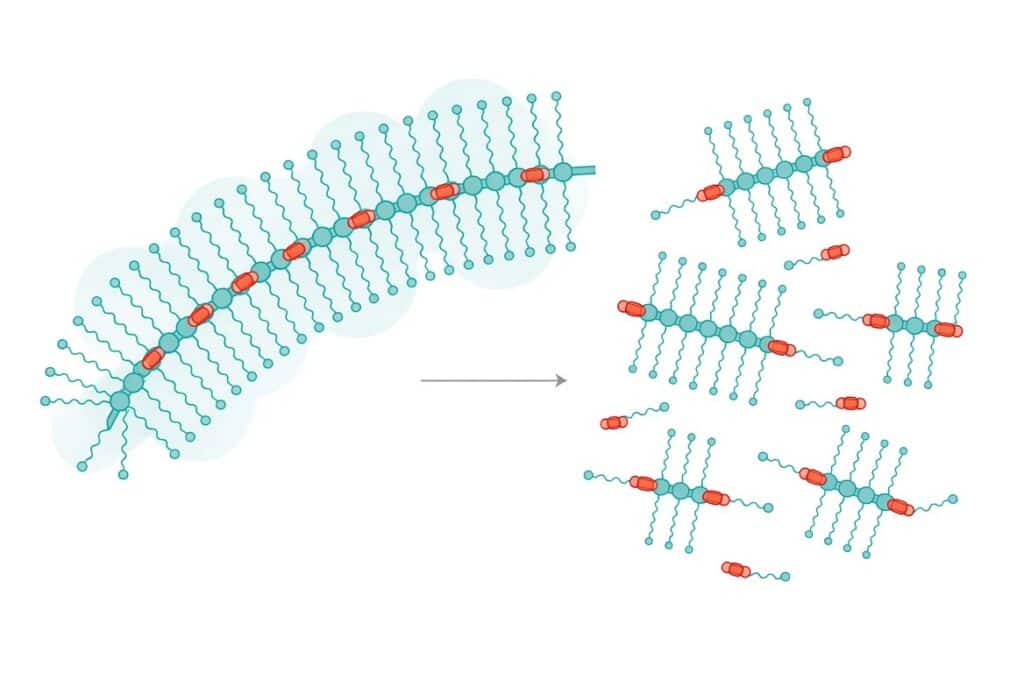
Hydrolytically degradable bottlebrush PEG carriers. Non-degradable carbon-backbone bottlebrushes can accumulate in tissues over long timescales. Recent work has addressed this limitation by incorporating hydrolytically labile units (e.g., 7-oxa-2,3-diazanorbornene) into the backbone. The resulting degradable Brush PEG retains prolonged circulation (elimination half-life ~24.7 h) while undergoing controlled hydrolysis that clears >99 % of circulating material within 13 days and dramatically reduces persistent liver and skin accumulation relative to non-degradable analogues. When conjugated to gemcitabine via a reduction-responsive linker, the degradable construct maintained antitumor efficacy with improved safety margins [4].
Additional illustrative systems.
- High-density brush-shaped polymer lipids have been engineered for lipid nanoparticles to reduce anti-PEG antibody binding while preserving transfection efficiency in repeated-dosing mRNA applications [6].
- ROMP-derived PEG bottlebrush networks and thermoresponsive POEGMA diblock copolymers have been used to form injectable, tissue-mimetic hydrogels and physically cross-linked depots that remain non-immunogenic [5].
- Antibody–bottlebrush conjugates (ABCs) carrying dozens to hundreds of prodrug molecules per targeting antibody have demonstrated high payload capacity and potent antitumor activity in preclinical models, far exceeding the drug-to-antibody ratios of conventional antibody–drug conjugates [10].
Collectively, these examples demonstrate that bottlebrush PEG systems can simultaneously deliver extended pharmacokinetics, reduced immunogenicity, improved barrier penetration, and, when designed appropriately, controlled degradability. Side-chain length (particularly EG2–EG3 versus longer repeats) emerges as a critical design parameter for balancing stealth performance against residual anti-PEG reactivity.
10. Challenges and Future Perspectives
Achieving uniformly high grafting densities on complex or curved surfaces at manufacturing scale remains difficult. Long-term oxidative stability of PEG under physiological conditions, batch-to-batch consistency of brush parameters, and regulatory familiarity with non-linear architectures are additional hurdles. Hybrid systems that combine short PEG side chains with zwitterionic or other antifouling motifs, degradable bottlebrush backbones that address tissue accumulation concerns, and stimuli-responsive brushes for on-demand release represent promising directions. Computational design and machine-learning approaches are beginning to accelerate optimization of grafting density, side-chain length, and backbone chemistry for specific applications.
11. Conclusions
PEG brushes—whether surface-grafted linear chains in the extended conformation or molecular bottlebrush polymers such as POEGMA—represent a powerful evolution of classical PEGylation. By controlling architecture and conformation, it is possible to enhance stealth performance, improve lubrication and antifouling, and substantially mitigate the growing problem of anti-PEG immunogenicity. Continued advances in controlled polymerization, surface chemistry, and conjugate design are positioning PEG brush systems as versatile platforms for next-generation nanomedicine, diagnostics, and biomaterials.
Further progress will depend on translating laboratory-scale density and architectural control into robust, scalable manufacturing processes and on generating the clinical data needed to establish these architectures as preferred alternatives or complements to traditional linear PEG.
References:
1. Site-specific POEGMA–exendin-4 conjugate Qi, Y.; Simakova, A.; Ganson, N. J.; Li, X.; Luginbuhl, K. M.; Ozer, I.; Liu, W.; Hershfield, M. S.; Matyjaszewski, K.; Chilkoti, A. A brush-polymer/exendin-4 conjugate reduces blood glucose levels for up to five days and eliminates poly(ethylene glycol) antigenicity. Nat. Biomed. Eng. 2017, 1, 0002. https://doi.org/10.1038/s41551-016-0002
2. Multi-site uricase–POEGMA conjugate Ozer, I.; Pitoc, G. A.; Layzer, J. M.; Moreno, A.; Olson, L. B.; Layzer, K. D.; Hucknall, A. M.; Sullenger, B. A.; Chilkoti, A. Polyethylene Glycol-Like Brush Polymer Conjugate of a Protein Drug Does Not Induce an Antipolymer Immune Response and Has Enhanced Pharmacokinetics than Its Polyethylene Glycol Counterpart. Adv. Sci. 2022, 9 (11), 2103672. https://doi.org/10.1002/advs.202103672
3. Worm-like bottlebrush PEG nanocarriers (airway / mucosal delivery) He, Z.-J.; Huang, B.; Cai, L.-H. Bottlebrush Polyethylene Glycol Nanocarriers Translocate across Human Airway Epithelium via Molecular Architecture-Enhanced Endocytosis. ACS Nano 2024, 18 (27), 17586–17599. https://doi.org/10.1021/acsnano.4c01983
4. Hydrolytically degradable bottlebrush PEG carriers Hydrolytically Degradable Polyethylene Glycol Bottlebrush Polymers Address the Stability-Clearance Trade-Off for Drug Delivery. Polym. Sci. Technol. 2026. https://doi.org/10.1021/polymscitech.6c00029
5. Conformal POEGMA bottlebrush coatings (anti-PEG antigenicity) Joh, D. Y.; Zimmers, Z.; Avlani, M.; et al. Architectural Modification of Conformal PEG-Bottlebrush Coatings Minimizes Anti-PEG Antigenicity While Preserving Stealth Properties. Adv. Healthcare Mater. 2019, 8 (8), e1801177. https://doi.org/10.1002/adhm.201801177
6. High-density brush-shaped polymer lipids for mRNA LNPs Xiao, Y.; Lian, X.; Sun, Y.; Sung, Y.-C.; Vaidya, A.; Chen, Z.; Gupta, A.; Chatterjee, S.; Zheng, L.; Guerrero, E.; Wang, X.; Farbiak, L.; Yang, Y.; Diamond, M. I.; Leal, C.; McDonald, J. G.; Siegwart, D. J. High-density brush-shaped polymer lipids reduce anti-PEG antibody binding for repeated administration of mRNA therapeutics. Nat. Mater. 2025, 24, 1840–1851. https://doi.org/10.1038/s41563-024-02116-3
7. ROMP-derived PEG bottlebrush networks and thermoresponsive POEGMA hydrogels / depots Vohidov, F.; Milling, L. E.; Chen, Q.; Zhang, W.; Bhagchandani, S.; Nguyen, H. V.-T.; Irvine, D. J.; Johnson, J. A. ABC triblock bottlebrush copolymer-based injectable hydrogels: design, synthesis, and application to expanding the therapeutic index of cancer immunochemotherapy. Chem. Sci. 2020, 11, 5974–5986. https://doi.org/10.1039/D0SC02611E
8. Dashtimoghadam, E.; Fahimipour, F.; Keith, A. N.; Vashahi, F.; Popryadukhin, P.; Vatankhah-Varnoosfaderani, M.; Sheiko, S. S. Injectable bottlebrush hydrogels with tissue-mimetic mechanical properties. Sci. Adv. 2022, 8, eabm2469. https://doi.org/10.1126/sciadv.abm2469
9. Ozer, I.; Slezak, A.; Everitt, J.; et al. An injectable PEG-like conjugate forms a subcutaneous depot and enables sustained delivery of a peptide drug. Sci. Adv. 2024. https://pmc.ncbi.nlm.nih.gov/articles/PMC10918641/
10. Antibody–bottlebrush conjugates (ABCs) Liu, B.; Nguyen, H. V.-T.; Wang, A. X.; Lensch, V.; Dai, Y.; MacNicol, P. L.; Wang, Y.; Wang, W.; Bhagchandani, S.; Shieh, P.; Kristufek, S. L.; Johnson, J. A. Antibody–bottlebrush prodrug conjugates for targeted cancer therapy. Nat. Biotechnol. 2025. https://doi.org/10.1038/s41587-025-02772-z