blog

Blog

Latest products update, new products introduction, PEG and biopolymer breakthrough research and products news.
Regulatory updates on PEGylated drugs and biopolymer medical devices.

SEC MALS HA MW

Read more

How to measure molecular weights of hyaluronic acid? The three methods we use: SEC-MALS, conventional SEC and Intrinsic Viscosity methods

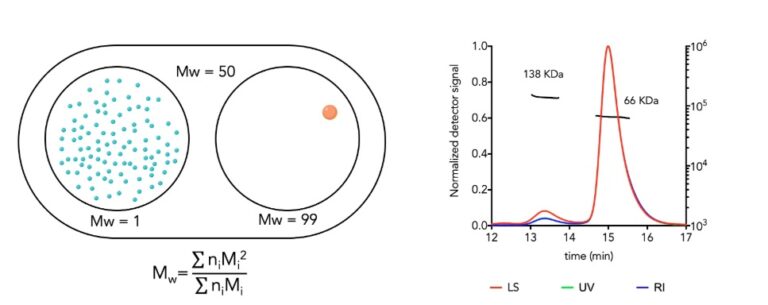
The molecular weight (MW) of hyaluronic acid (HA) can be determined by size-exclusion chromatography coupled with multi-angle light scattering (SEC-MALS), conventional SEC, or intrinsic viscosity. SEC-MALS provides absolute weight-average MW. Conventional SEC and intrinsic viscosity measurements provide a rapid, low-cost alternative MW estimation.

Pegfilgrastim V16B19 large

Read more

pegfilgrastim case study for 7 biosimilars – PEGylation is a mature and versatile platform for improving biopharmaceutical performance

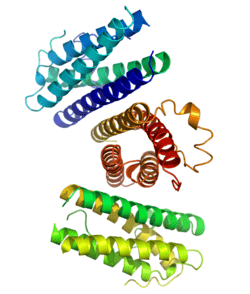
Food and Drug Administration (FDA) has approved seven biosimilars for pegfilgrastim, the active ingredient in the reference product Neulasta (developed by Amgen). Pegfilgrastim is a PEGylated form of granulocyte colony-stimulating factor used to reduce the risk of febrile neutropenia in patients undergoing myelosuppressive chemotherapy.

PEG extended vs coiled 2

Read more

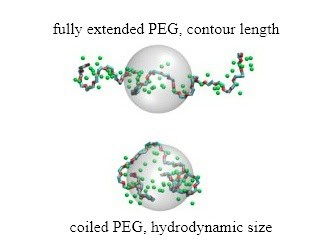
Calculating the Contour Length and Hydrodynamic Radius of Polyethylene Glycol in Aqueous Solutions

This post outlines the fundamental methods for calculating the contour length—the maximum extended chain dimension—and the hydrodynamic radius, which characterizes the effective size of the solvated coil. These calculations rely on established polymer physics and empirical relations from experimental data.

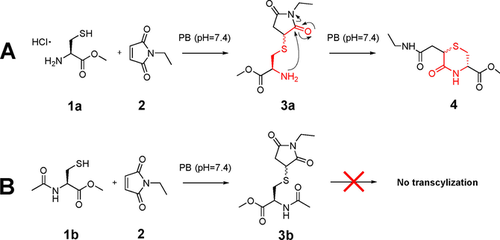
Model system for the transcyclization reaction.

Read more

Improving the Stability of Maleimide–Thiol Conjugation for Drug Targeting

Abstract Maleimides are essential compounds for drug conjugation reactions via thiols to antibodies, peptides and other targeting units. However, one main drawback is the occurrence of thiol exchange reactions with, for example, glutathione resulting in loss of the targeting ability. A new strategy to overcome such retro-Michael exchange processes of maleimide–thiol conjugates by stabilization of […]

Graphic of a DNA strand for the article about PROTAC for cancer treatment.

Read more

The Power of PROTAC for Cancer Treatment

PROTACs have the potential to transform the landscape of cancer therapy by targeting specific proteins for degradation. Learn about what they are and why they’re so powerful.